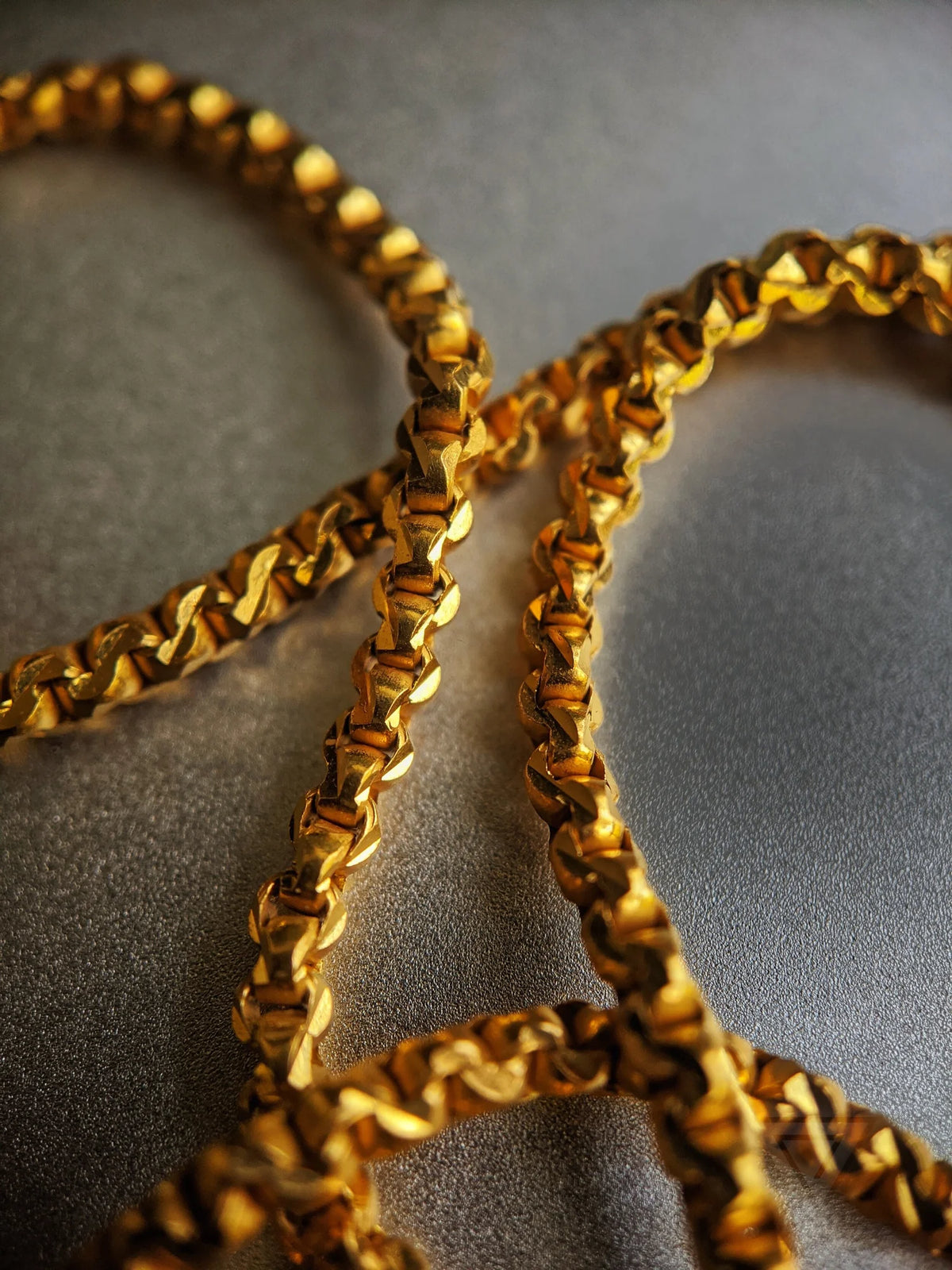


Taxation and the sale of jewelry in an estate
The loss of a loved one is often the moment to take stock of a family's personal property. With the rise in the price of gold in recent years, jewelry represents, for more than 90% of French households, the most valuable part of their personal property. The appraisal, division and transmission of jewelry and precious metals are therefore essential to a fair division of the family estate.
This article describes French law and taxation.
1. A few legal points
Upon a death, the heirs usually call on an auctioneer (commissaire-priseur) through the notary. The auctioneer draws up an inventory of the personal property and values it; this is known as the "prisée". If there is no prisée, personal property is valued at a flat rate of 5% of the deceased's total estate.
If the jewelry appears in the auctioneer's inventory, duties are paid as part of the estate. No further tax will therefore be due on a later sale, provided the supporting documents are kept.
However, jewelry is often passed on during its owner's lifetime and is then absent from the auctioneer's inventory. Well aware of this, the French tax authorities have introduced a flat-rate tax on precious metals and precious objects. It applies to the sale of a precious object within the meaning of the law: jewelry, but also collectors' items, antiques and works of art.
This tax has two rates, depending on the nature of the object sold:
- for precious metals (bullion, coins…), the rate is 11.5% from the first euro;
- for jewelry, works of art, collectors' items and antiques, the rate is 6.5% for objects sold for more than €5,000 each.
Thus, as part of an estate, jewelry sold for less than €5,000 per item is not subject to any tax.
2. In practice, how can your jewelry be appraised and sold?
Our house carries out many appraisals of jewelry, diamonds and colored stones for auction houses or in collaboration with notaries. Our appraisals can be used for insurance purposes and are admissible in court where necessary.
When we receive a request for an appraisal, we arrange an appointment and examine your jewelry. Any verbal appraisal is entirely free of charge and, if you wish, we add guidance on taxation and division. Once the appraisal is done, we may offer a purchase price, a consignment sale, or a sale through our partner auction house. You are free to accept or decline our offer, at no cost.
To make an appointment, contact us.